
Table of Contents
As organic pet care dominates global procurement strategies, buyers face an ongoing consumer interrogation: is a coffee wood dog chew good or bad for canine dental health? In an industry full of plastic toys and high-calorie treats, pet parents are protective of their dogs’ well-being, knowing the wrong chew can cause tooth fractures, gum punctures, or gastrointestinal lacerations.
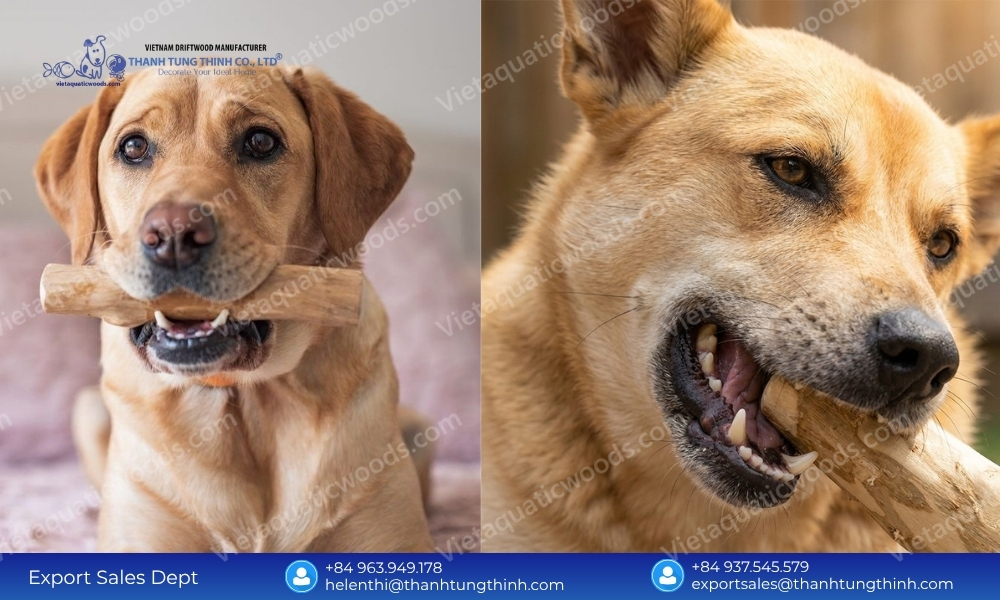
To answer whether a coffee wood dog chew is good or bad, enterprises must evaluate structural anatomy and manufacturing integrity. High-grade coffee wood behaves differently than standard branches; it offers a safe, non-splintering, and calorie-free alternative. Locking in a certified manufacturing stream addresses consumer anxieties, satisfies retail networks, and expands commercial margins through clinical structural safety.

The Root of the Dilemma: Why B2B Buyers Question Sourcing Safety
Understanding the deep anxiety surrounding natural wooden toys is essential for any professional pet supply importer. Historically, veterinarians have strictly warned pet parents against allowing dogs to chew on loose branches or wooden sticks found in gardens or parks. Typical native timbers—such as oak, pine, birch, or maple—possess a linear, brittle cell structure. When subjected to the immense downward jaw pressure of a domestic canine, these woods split longitudinally.
This splitting action generates long, razor-sharp wooden needles that can easily pierce soft gum tissue, wedge tightly between premolars, or cause life-threatening internal perforations if swallowed whole. Because of this persistent biological hazard, independent pet shop owners, boutique retail buyers, and global purchasing agents are naturally hesitant when evaluating an organic wood toy line.
When corporate buyers research whether a coffee wood dog chew good or bad for retail distribution, they are not just looking at a price sheet. They are looking for a structural guarantee that protects their wholesale clients from product liability claims and negative online reviews. The solution to this commercial challenge lies in understanding the distinct cellular composition of slow-growing tropical agricultural wood.

Analyzing the Cellular Structure of a Genuine Coffee Wood Dog Chew
The fundamental reason a premium Coffee Wood Dog Chew avoids the hazardous splintering behavior of standard timber comes down to the evolutionary anatomy of the coffee plant itself (Coffea canephora and Coffea arabica). Grown in high-density tropical climates under strict agricultural cultivation, coffee trees develop at a remarkably slow rate.
This prolonged growth phase forces the cellular walls of the wood to pack together tightly, resulting in an incredibly close-grained, ultra-dense heartwood with high tensile elasticity.
When a dog works their molars against a professionally dried Coffee Wood Dog Chew, the timber does not crack, shear, or fracture along a straight path. Instead, the continuous mechanical action of the dog’s jaw combined with the natural moisture of canine saliva activates a unique softening process.
The dense exterior wood fibers gradually hydrate and peel away in tiny, flexible, pulp-like micro-shavings. Instead of facing dangerous wooden needles, the animal interacts with a soft, pliable texture that yields under intense compression. For retail buyers asking if a coffee wood dog chew good or bad for long-term chewers, this physical softening mechanism provides the definitive biological answer: it is an exceptionally safe hardscape engineered by nature to resist destructive jaw pressure.

Is a Coffee Wood Dog Chew Good or Bad for Periodontal Excellence?
Periodontal disease stands as the most diagnosed clinical condition in adult companion animals worldwide, with over eighty percent of dogs showing advanced signs of oral inflammation by age three. Calcified plaque and tartar accumulation along the subgingival margin lead directly to chronic pain, tooth loss, and systemic bacterial infections that endanger vital organs like the heart and kidneys.
While standard carbohydrate-based dental sticks disappear within minutes and contribute to companion animal obesity, a durable Coffee Wood Dog Chew offers a zero-calorie, long-lasting alternative that actively cleans teeth through systematic, prolonged mechanical abrasion.
As a dog chews on the resilient surface of a Coffee Wood Dog Chew, the soft cellulose micro-fibers that detach act exactly like an organic toothbrush. These minute, flexible plant fibers gently sweep across the enamel surface, scrubbing away soft bacterial biofilms and sticky plaque before it can undergo calcification into hardened tartar. Because a heavy chewer will work on a single stick for hours at a time, the continuous physical friction reaches deep into the hard-to-clean posterior molars and premolars.
The comprehensive table below breaks down the technical and performance attributes of a certified Coffee Wood Dog Chew against other mass-market dental solutions, giving B2B procurement managers the precise data required to confidently educate their retail wholesale clients on why this product excels:
| Performance & Commercial Metric | Certified Coffee Wood Dog Chew | Mass-Market Starch Dental Sticks | Synthetic Nylon Chew Toys |
| Primary Oral Cleaning Action | Sustained mechanical micro-fiber friction | Brief chemical enzyme breakdown | Rigid surface scraping |
| Average Product Longevity | Weeks to months of continuous usage | 1 to 3 minutes before consumption | Indefinite (Risk of structural hardening) |
| Caloric & Additive Profile | 0% Calories; 100% organic plant matter | High carbohydrate; artificial binders | 0% Calories; synthetic plastic polymers |
| Gastrointestinal Risk Index | Low (Fibers dissolve into soft dietary roughage) | Low (Fully digestible edible paste) | High (Non-biodegradable microplastic shards) |
| Splintering & Fracture Hazard | Extremely low due to moisture softening | Zero risk of splitting | Medium risk of sharp plastic shards breaking off |
| Wholesale Profit Margin Potential | Excellent (High-margin eco-luxury tier) | Low to medium (High-volume commoditized tier) | Medium (Highly competitive market space) |
When wholesale pet supply distributors present this data to independent boutique chains or e-commerce store owners, the debate over whether a coffee wood dog chew good or bad transforms into a powerful commercial narrative. You are providing a dual-action asset: a highly engaging pet toy that doubles as an advanced, non-toxic dental clean-up system.

The Gastrointestinal Journey: What Happens When a Dog Swallows the Fibers?
The secondary source of anxiety for B2B buyers and health-conscious pet parents involves the involuntary ingestion of wood particles and how these fibers behave inside a canine’s gastrointestinal tract. When a dog swallows the tiny, pulp-like shavings generated by an authentic Coffee Wood Dog Chew, the material enters a highly acidic stomach environment. Composed purely of organic plant cellulose, it contains zero synthetic glues or toxic chemical washes.
Although canines lack the enzymes to fully dissolve raw wood polymers, the extreme softness and miniature size of these detached cellulose flakes prevent them from clumping or creating physical blockages. Instead, these micro-fibers function like natural dietary roughage, sliding smoothly through the intestines and adding healthy bulk to the stool before safe excretion. The physical evidence confirms that when evaluating if a coffee wood dog chew is good or bad for digestion, it is entirely benign.

Technical Sourcing Architecture: Choosing the Right Sizes for B2B Containers
Even the highest quality natural chew poses safety risks if distributed in incorrect sizes, as oversized logs frustrate small breeds while small sticks create choking hazards for power chewers. To insulate businesses from these operational errors, procurement managers must implement a standardized classification framework. Top-tier manufacturing enterprises utilize a structured sizing architecture to perfectly balance container allocations.
- Extra Small (XS) and Small (S) profiles measure 11cm to 15cm for toy breeds and puppies under 10kg, forming a high-volume urban retail staple.
- Medium (M) configurations range from 17cm to 20cm, targeting the massive mid-tier market of popular breeds like French Bulldogs and Corgis.
- Heavy-duty Large (L) and Extra Large (XL) logs measure 21cm to 24cm, engineered specifically for heavy working breeds and extreme chewers.
Evaluating regional breed demographics to determine whether a coffee wood dog chew is good or bad optimizes bulk sizing ratios and maximizes retail performance.

Sourcing Integrity: Why Advanced Industrial Processing Eliminates the Bad
To truly guarantee that a coffee wood dog chew good or bad analysis leans entirely toward a safe and highly profitable outcome, the raw timber must undergo rigorous industrial curation. Unverified wood contains excessive moisture, fungal spores, and abrasive bark that can cause mold during transit, leading to devastating container rejections. To eliminate these risks, global distributors partner with an established leader like Thanh Tung Thinh.
Operating modern production infrastructure in Vietnam, they control every variable through scientific protocols, starting with sustainably gathering timber from verified plantations. The wood enters computer-controlled kiln dehydration systems to reduce core moisture to a hyper-stable eight to twelve percent range, neutralizing fungal spores and locking in fiber elasticity.
Heavy-duty mechanical debarking then strips away rough outer bark, followed by an exhaustive 360-degree sanding process to eliminate sharp edges without any synthetic chemicals or toxic bleaches, ensuring a premium, shelf-ready product.

Securing Your Enterprise Margins via Direct Factory Sourcing
In the hyper-competitive global pet supply trade, your choice of supply chain origin defines your long-term commercial survival. Many international wholesale companies make the critical error of purchasing natural wood toys through secondary third-party trading brokers located in North America or Europe.
This added logistical layer introduces unnecessary middleman markups ranging from fifteen to thirty-five percent, directly eroding your corporate profit margins and stripping away your competitive edge in the marketplace. By shifting your procurement operations directly to a primary manufacturer in Vietnam like Thanh Tung Thinh, your business secures unbeatable factory-floor pricing, reliable year-round production capacity, and a clear, traceable supply chain story that modern retail consumers actively demand.
Direct factory sourcing allows your enterprise to access comprehensive Private Label (OEM/ODM) customization options that generic brokers simply cannot provide. You can permanently etch your corporate logo directly onto the wood surface using high-precision factory lasers, design custom eco-friendly retail hangtags, or request pre-packed, full-color counter display boxes tailored perfectly to your brand specifications.
This strategic shift transforms a raw agricultural byproduct into a high-equity premium brand asset that commands top retail prices, boosts customer retention rates, and accelerates market share growth.

Secure Your Dependable Supply Chain Partnership Today
Do not risk your corporate profit margins, e-commerce brand reputation, or retail relationships with unverified middlemen, small agricultural workshops, or inconsistent trading brokers. Resolve your supply chain safety anxieties with a direct manufacturing partner wholly dedicated to your long-term commercial growth and market success.
Contact the international corporate sales headquarters at Thanh Tung Thinh today to discuss your specific bulk container distribution metrics, request a factory-direct wholesale price quote, or arrange a custom sample shipment to verify our elite sanding quality firsthand!

🌐 Website: https://vietaquaticwoods.com/
📩 Email: [email protected]
📱 Phone / WhatsApp: +84 96 394 91 78
📌Pinterest: https://www.pinterest.com/vietaquaticwoods/
📌Youtube: https://www.youtube.com/@vietaquaticwoods
📌Facebook: https://www.facebook.com/vietaquaticwoods/
Questions & Answers
1. When analyzing if a coffee wood dog chew good or bad for teeth, what is the primary consensus among pet safety experts?
The definitive consensus is that a premium Coffee Wood Dog Chew is exceptionally good for canine dental hygiene due to its unique physical behavior under pressure. Unlike traditional backyard sticks that crack into sharp wooden needles, this specialized agricultural wood reacts to canine saliva by hydrating and softening into tiny, flexible cellulose shavings.
This creates a safe, gentle mechanical scrubbing action that effectively polishes the tooth enamel, removes bacterial biofilms, and cleans sticky plaque away from the delicate subgingival margin without risking a painful fracture or a gum puncture.
2. Can an aggressive power-chewing breed safely ingest the tiny wood flakes generated by the chew?
Yes, the miniature pulp-like shavings produced during a chewing session are completely non-toxic and remarkably safe for dogs to swallow in small quantities. Because authentic coffee wood is an entirely organic, plant-based substance free from chemical binders or artificial glues, these tiny cellulose flakes do not clump together inside the gastrointestinal tract. Instead, they travel smoothly through the stomach lining and intestinal paths exactly like regular dietary fiber, adding a small amount of healthy bulk to the stool before being effortlessly excreted.
3. Does a real Coffee Wood Dog Chew contain any caffeine that could potentially cause pet poisoning or toxicity?
No, a genuine Coffee Wood Dog Chew contains absolutely zero traces of caffeine or related toxic alkaloids. Within the biological anatomy of the coffee plant, caffeine is strictly synthesized and concentrated inside the soft leaves and the coffee beans themselves. The dense, slow-growing timber of the tree trunk used to manufacture these chew toys is thoroughly non-toxic, non-stimulant, and entirely safe for daily, long-term canine enrichment across all life stages.
4. How does direct factory sourcing from Thanh Tung Thinh protect bulk container orders from developing mold during shipping?
Thanh Tung Thinh eliminates the catastrophic risk of transit mold by routing all raw timber through high-capacity, computer-controlled kiln dehydration systems before packaging.
This heavy-duty thermal process slowly extracts deep-seated moisture from the wood core over several weeks, stabilizing the equilibrium moisture content down to a precise eight to twelve percent range. This scientific standard completely dries out the timber and permanently stops fungal development, guaranteeing your bulk inventory arrives at international ports in pristine, retail-ready condition.
5. What custom private-label branding options can your factory execute for high-volume B2B wholesale contracts?
Our production facility provides extensive, end-to-end OEM/ODM private-label capabilities tailored for major e-commerce brands, large retail grocery chains, and international distributors. We can permanently etch your custom corporate logo onto the wood surface via high-precision laser engraving, manufacture personalized eco-friendly cardstock hangtags with retail barcodes, or pre-pack your order into full-color counter display boxes that arrive at your fulfillment centers completely shelf-ready.
6. Is a Coffee Wood Dog Chew suitable for pet parents managing dogs with extreme protein allergies or sensitive stomachs?
Absolutely. One of the most powerful wholesale marketing advantages of a premium Coffee Wood Dog Chew is its strictly hypoallergenic, single-ingredient composition. Because it is composed purely of organic wood matter and contains zero meat proteins, grain fillers, dairy derivatives, or artificial colorings, it can be confidently marketed to pet parents who are managing highly sensitive companion animals on strict elimination diets or suffering from inflammatory bowel disease.
7. What is the standard minimum order quantity (MOQ) required to partner directly with your Vietnamese factory?
Our commercial production assets and advanced drying kilns are highly optimized for enterprise-grade, high-volume manufacturing export streams. We typically accommodate Full Container Loads (FCL) or substantial, high-volume Less than Container Loads (LCL) to guarantee that our global B2B partners secure the absolute lowest per-unit acquisition costs and maximize their shipping container weight efficiency.
8. When should a retail store instruct an end-consumer to discard an old chew stick and replace it with a fresh one?
To maintain absolute safety standards, a retail store should instruct pet parents to monitor the physical scale of the wood stick as the weeks pass. Once a dog has gradually worn down both ends of their Coffee Wood Dog Chew to a small, degraded stub that could easily fit entirely inside their open mouth, the remnant must be taken away and discarded immediately. Replacing the worn stub with a fresh, correctly sized stick completely removes any residual risk of accidental swallowing or choking.
