
Table of Contents
Aquascaping is no longer just a hobby; it has evolved into a design discipline where structure, biology, and aesthetics intersect. Among all elements inside a tank, driftwood plays a strategic role in shaping both visual composition and ecological balance. Understanding how to place driftwood in fish tank setups correctly is therefore not optional – it is foundational.
Many aquarium owners face recurring issues such as floating wood, unstable layouts, or discolored water. These problems are rarely caused by the material itself, but rather by incorrect placement and preparation. This guide is designed to help you execute the process with precision, from preparation to advanced layout strategy.
Why Proper Placement of Driftwood Matters in Aquascaping
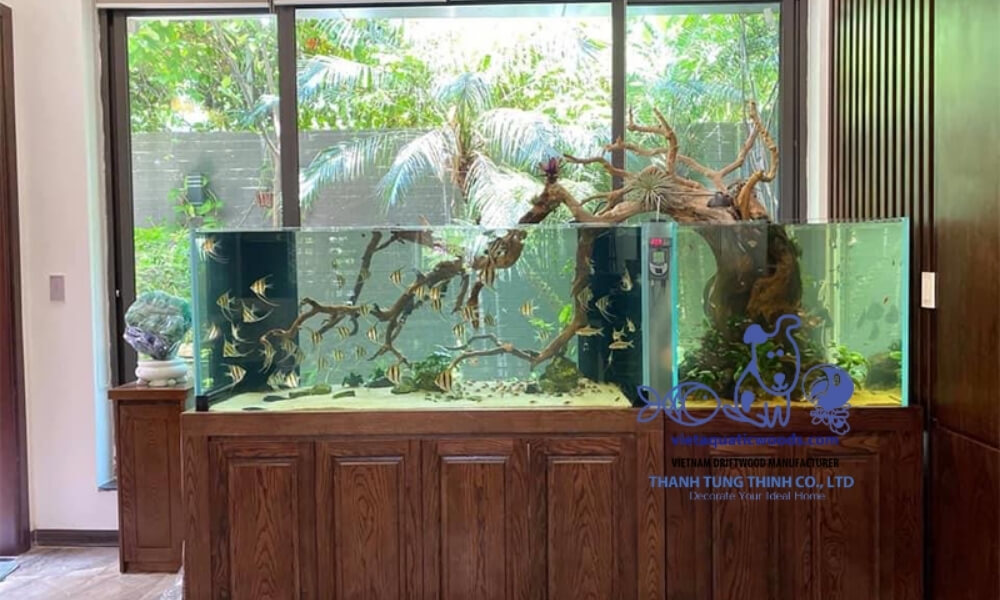
Driftwood is not simply a decorative addition; it is a structural anchor that defines the entire aquascape. It influences how fish move, how water circulates, and how the visual hierarchy is perceived. When positioned correctly, it becomes the focal point that ties all elements together.
Incorrect placement often leads to systemic issues inside the tank. Water flow can become restricted, filtration efficiency may decline, and fish behavior can be negatively affected. From a design standpoint, poor placement results in a flat and unbalanced composition.
In professional aquascaping, driftwood is treated as the backbone of the layout. Every plant, rock, and open space is positioned relative to it. This is why mastering placement is critical before moving into more advanced design layers.

Types of Driftwood and Their Impact on Placement Strategy
The type of driftwood you choose will directly influence how you position it inside the tank. Each wood variety has different density, shape, and behavior when submerged. These characteristics determine both stability and visual direction.
Heavier woods such as Mopani or Malaysian driftwood tend to sink quickly and provide immediate structural stability. Lighter woods like Spider wood offer more intricate shapes but often require anchoring to prevent floating. Bonsai-style driftwood, on the other hand, is typically used for high-end layouts where aesthetics are prioritized.
Tank size also plays a critical role in placement strategy. Smaller tanks require minimal structures to avoid visual clutter, while larger tanks allow for layered compositions that create depth. Choosing the wrong wood for your tank size will complicate the entire process of learning how to place driftwood in fish tank environments effectively.

Step-by-Step Guide: How to Place Driftwood in Fish Tank
Executing this process correctly requires both preparation and spatial awareness. Each step builds on the previous one, so skipping any stage will reduce overall stability. The goal is to create a layout that is both secure and visually natural.
Step 1 – Prepare the Driftwood Before Placement
Preparation ensures that the driftwood is safe and stable before entering the tank. Cleaning and soaking remove impurities while reducing the risk of floating. Boiling, when possible, accelerates this process and minimizes tannin release.
Failure to prepare driftwood properly often leads to avoidable complications. Water discoloration and bacterial growth are common consequences. These issues can disrupt the entire ecosystem of the tank.
Step 2 – Plan the Layout Outside the Tank
Professional aquascapers rarely design directly inside the aquarium. Instead, they build a dry layout to test composition, balance, and perspective. This approach reduces risk and allows for better control over the final result.
Planning helps define focal points and visual flow. It also ensures that the layout does not appear overly symmetrical or artificial. A well-prepared layout significantly improves your execution when applying how to place driftwood in fish tank designs.
Step 3 – Position Driftwood Inside the Aquarium
Once the layout is finalized, the next step is transferring it into the tank. Placement should begin from the background and gradually move toward the foreground. This method helps maintain depth and avoids unnecessary disruption.
The angle and orientation of each piece are critical. Slight tilts can create a more dynamic and natural appearance. At the same time, enough open space must be preserved to allow fish to swim freely.
Step 4 – Anchor Driftwood Securely
Anchoring is essential to ensure long-term stability. Without proper support, driftwood may shift or float, especially during water changes or maintenance. This can damage plants and compromise the layout.
There are several effective methods to secure driftwood. Some aquascapers use rocks for a natural look, while others prefer nylon thread or aquarium-safe glue for stronger fixation.
| Method | Stability Level | Application Context |
| Rocks | Medium | Natural aesthetic layouts |
| Nylon Thread | High | Temporary setups |
| Aquarium Glue | Very High | Permanent structures |
| Base Plate | Maximum | Large, complex aquascapes |
Choosing the right anchoring method depends on your layout complexity. A stable foundation is a key component when mastering how to place driftwood in fish tank systems.
Step 5 – Final Adjustment and Water Fill
The final stage involves filling the tank and making small adjustments. Water should be added slowly to prevent shifting the structure. Observing the layout during this phase helps identify any instability.
Minor corrections may still be needed after filling. Adjusting angles or repositioning smaller elements can improve the final composition. This step ensures that the layout remains consistent over time.

How to Anchor Driftwood in Aquarium (Prevent Floating Issues)
Floating driftwood is one of the most common challenges in aquascaping, especially when working with lightweight or newly sourced wood. If not handled properly, it can disrupt the entire layout and affect both aesthetics and tank stability. A structured anchoring approach ensures long-term positioning and eliminates the need for constant adjustments.
Why Driftwood Floats in Aquarium Setups
Driftwood floats primarily because it contains trapped air within its structure and has not fully absorbed water. Lighter wood types such as spider wood tend to have lower density, making them more prone to buoyancy. In many cases, insufficient pre-treatment is the root cause of persistent floating issues.
Soaking and Pre-Treatment to Reduce Buoyancy
Soaking driftwood in water allows it to gradually absorb moisture and increase in weight. This process can take several days or even weeks depending on the wood type and thickness. Boiling the wood, when possible, accelerates water absorption and helps remove excess tannins.
Using Rocks to Anchor Driftwood Naturally
Placing rocks at the base of driftwood is a simple and natural anchoring method. The added weight stabilizes the structure while maintaining an organic look within the aquascape. Proper positioning is important to ensure the rocks do not disrupt the visual balance.
Securing Driftwood with Fishing Line or Nylon Thread
Fishing line or nylon thread can be used to tie driftwood to rocks or other stable elements in the tank. This method is effective for temporary setups or during the initial soaking phase. Once the driftwood becomes fully waterlogged, the thread can be removed without affecting the layout.
Using Aquarium-Safe Glue for Permanent Fixation
Aquarium-safe glue provides a strong and long-lasting solution for anchoring driftwood. It is commonly used in professional aquascaping where stability is critical. When applied correctly, it ensures the driftwood remains fixed even under strong water flow.
Mounting Driftwood on a Base Plate for Maximum Stability
For large or complex layouts, attaching driftwood to a base plate offers maximum structural stability. The base can be hidden under substrate, creating a clean and seamless appearance. This method is widely used in display tanks and long-term aquascaping projects.
When Driftwood Will Naturally Sink Over Time
The time required for driftwood to sink naturally varies based on its density and preparation level. In most cases, fully soaked driftwood will eventually remain submerged without additional support. Monitoring during the early stages ensures that any movement can be corrected promptly.

Common Mistakes When Placing Driftwood
Many aquascapers repeat the same mistakes, regardless of experience level. These errors often originate from rushing the process or skipping preparation. Over time, they lead to instability and reduced visual quality.
One common issue is placing driftwood without soaking it first. This results in floating wood and discolored water. Another frequent mistake is overcrowding the tank, which limits fish movement and disrupts balance.
Ignoring water flow is also problematic. Driftwood positioned incorrectly can block filtration and reduce oxygen circulation. These mistakes highlight the importance of understanding placement as a technical process, not just a visual one.
Pro Aquascaping Tips for Natural Driftwood Placement
Achieving a natural look requires more than basic placement. It involves understanding how to create depth, contrast, and visual flow within a confined space. This is where advanced aquascaping techniques come into play.
Depth can be created by varying the size and position of driftwood pieces. Larger elements are typically placed in the foreground, while smaller ones are positioned toward the back. This creates a sense of perspective that enhances realism.
Combining driftwood with aquatic plants further improves the layout. Mosses and slow-growing plants can be attached to wood surfaces, blending hardscape with softscape. This integration results in a more cohesive and natural environment.

Expert Insight: How Professionals Place Driftwood for High-End Aquascapes
Professional aquascapers approach driftwood placement as a storytelling process. They design layouts that mimic natural environments such as riverbanks, forests, or submerged root systems. Each piece of wood contributes to a larger visual narrative.
One advanced technique involves aligning driftwood with an imagined flow direction. This creates a sense of movement and continuity within the tank. Another method focuses on layering multiple pieces to build complexity and depth.
Negative space is also a key factor in professional layouts. Leaving certain areas open enhances contrast and prevents visual overload. These techniques elevate your understanding of how to place driftwood in fish tank layouts beyond basic execution.
Driftwood Maintenance After Placement
Maintaining driftwood is essential for long-term stability and appearance. Regular observation helps identify any changes in structure or water quality. Preventive care reduces the need for major adjustments later.
Surface cleaning may be required to remove algae or biofilm. White biofilm is common in new setups and is generally harmless. However, it should still be managed for aesthetic reasons.
Driftwood can also influence water chemistry over time. Monitoring pH levels ensures that the environment remains suitable for your fish. Proper maintenance preserves both the function and beauty of the aquascape.

FAQs – How to Place Driftwood in Fish Tank
Driftwood often raises practical questions, especially for beginners. Most concerns relate to preparation, safety, and long-term behavior in water. Addressing these questions helps users avoid common mistakes.
Soaking driftwood before placement is strongly recommended. It reduces buoyancy and minimizes tannin release. This step improves overall stability.
Driftwood is generally safe for most fish species. However, compatibility should always be verified. Understanding these details supports a more effective approach to how to place driftwood in fish tank environments.
Where to Buy High-Quality Driftwood for Aquarium
Sourcing high-quality driftwood is just as important as learning how to place driftwood in fish tank setups correctly. Poor-quality wood can lead to instability, unwanted chemical release, and inconsistent shapes that limit aquascaping potential. This is why experienced hobbyists and B2B buyers increasingly prioritize direct manufacturer sourcing.
Working with a supplier like Thanh Tung Thinh Co., Ltd ensures better control over material quality, treatment processes, and consistency across batches. As a direct manufacturer in Vietnam, the company provides pre-treated driftwood that is safe for aquarium use and optimized for aquascaping applications. This significantly reduces preparation time and improves reliability for both individual setups and bulk projects.

For businesses, sourcing directly also unlocks advantages in pricing, customization, and scalable supply. Instead of dealing with inconsistent trading channels, buyers can access standardized production and export-ready quality. This creates a more efficient and predictable supply chain for aquarium retailers and aquascaping brands.
Read more:
- How to Use Driftwood in Aquarium: Complete Guide for Beginners & Aquascapers
- Best Driftwood for Aquarium (2026): Top 13 Types Reviewed & Compared
